Character Animation for Brands: Three Seconds That Hold Attention
A brand character has about three seconds to feel alive. This guide covers the design and animation choices that make that happen, from silhouette and appeal to timing and mascot ads.
Character Animation for Brands: Three Seconds That Hold Attention
A brand character holds attention in short video when it reads instantly (a clear silhouette and appealing proportions), acts with a clear thought (a look, a reaction, a decision) and moves with believable weight and timing. In a feed, that has to happen inside roughly the first three seconds, so the opening pose and first action matter more than anything else in the piece.
The Character Videos track of the Animate & Create Academy is built around that window. Its free lesson, "What makes a character feel alive in three seconds", starts from the same question: what does a viewer need to see before deciding to keep watching?
Why characters work for brands
A product can be shown. A character can want something, react to something and be remembered. A mascot gives a brand a face that can appear in every format, from a six-second bumper to a long campaign, and it can carry a product without the ad feeling like a product demo. Characters also age well: once designed and rigged, the same character can star in an unlimited number of new pieces.
Design: the character must read at phone size
Before animation, design decides whether a character can hold attention at all.
- Silhouette. Fill the character in solid black. If the pose and personality still read, the design works at small sizes. If it turns into a blob, simplify it.
- Proportion and appeal. Appeal means the character is pleasant or interesting to look at, not necessarily cute. Strong shape contrast (large and small, round and angular) makes a design more readable than evenly sized parts.
- One clear feature. A recognizable element (a shape, a color, an accessory) lets viewers recognize the character in the next video, even half off-screen.
- Faces that read. Large, clear eyes and a simple mouth shape communicate emotion at small sizes better than detailed faces do.
Animation: the principles that matter most in short video
The twelve principles of animation described by Disney animators Frank Thomas and Ollie Johnston in "The Illusion of Life" (1981) still underpin character animation. For short brand content, a handful do most of the work:
- Anticipation. A small move in the opposite direction before the main action tells the viewer something is about to happen and keeps them watching for it.
- Timing and spacing. The number of frames a move takes, and how they are spaced, decides whether a character feels heavy, light, lazy or excited.
- Squash and stretch. Used carefully, it gives a sense of mass and flexibility, even on stylized 3D characters.
- Follow-through and overlapping action. Ears, hair, clothing and accessories keep moving after the body stops. Without it, characters look stiff and digital.
- Arcs. Natural movement follows curved paths. Check them by tracing a hand or the head across frames.
- Staging. Present one idea at a time, from an angle where the pose reads clearly.
Acting beats: the character must be thinking
A character that only moves is a moving object. A character that thinks is alive. Plan the piece as a short series of acting beats:
1. Notice. The character sees something (the product, the viewer, a problem). 2. React. A clear emotional response, usually with anticipation and a held pose. 3. Decide. A change of expression or posture that shows a choice. 4. Act. The physical action that follows from the decision.
Even three seconds can hold two beats: a look and a reaction. Eye direction leads; the head follows, then the body. Blinks placed on changes of thought make a character feel present.
Weight and timing
Weight is what most beginner character animation lacks. Heavy characters take longer to start and stop, and their bodies compress on landing. Light characters change direction quickly. Two practical tools:
- Holds. A held pose of 8 to 12 frames at 24 fps lets a key expression register before the next move.
- Graph Editor work. Ease out of holds, overshoot slightly on fast moves and settle back. Linear curves make characters look mechanical.
Character and product together
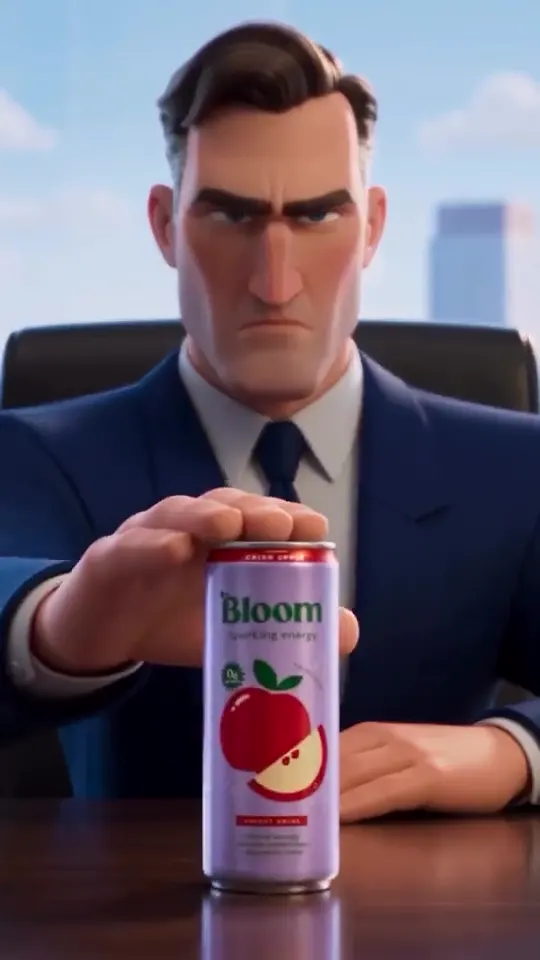
The most common brand use is the mascot ad, where a character interacts with a product. A few rules keep the product readable:
- The character points the eye. The character looks at, reaches for or reacts to the product, and the viewer's eye follows.
- The product stays true. The product keeps its real color, shape and label, even if the character is stylized. Lighting should feel like one world for both.
- The product gets the hero frame. Plan one clean frame where the product is clearly shown, usually after the character's biggest reaction. The Blender product animation guide explains how to plan that frame, and the product render lighting guide covers lighting the product so it holds up next to a stylized character.
One character, endless content
Once a character is designed, rigged and has a defined personality, new content becomes much faster: new poses, expressions and short acting moments can be produced without repeating the design work. Brands that plan for this from the start define expression sheets, a small library of signature poses and a voice for the character.
[Animate & Create](/) designs and animates brand characters in 3D and 2D. Stylized character pieces can also be made as AI animation when speed matters more than a reusable rig.
Frequently asked questions
What makes a brand mascot memorable?
A clear silhouette, one recognizable feature, readable expressions and a consistent personality across every video. Consistency matters as much as design.
How long should a character animation for social media be?
Most short-form character pieces run 6 to 15 seconds. Whatever the length, the character needs a clear action or reaction within the first three seconds.
Which animation principles matter most for short videos?
Anticipation, timing and spacing, follow-through and overlapping action, arcs and staging. They make a character read quickly and feel like it has weight.
Do I need to know rigging to animate characters?
Not at first. Many artists start by animating with existing rigs and learn rigging later. Understanding how a rig works does help when a pose or deformation will not behave.
Can a character and a product appear in the same ad?
Yes, and it is one of the most effective formats when the character directs attention to the product and the product keeps its real look and gets one clean hero frame.
About the author: Brett Barber, Founder & Creative Director at Animate & Create.
Frequently asked questions
What makes a brand mascot memorable?
A clear silhouette, one recognizable feature, readable expressions and a consistent personality across every video. Consistency matters as much as design.
How long should a character animation for social media be?
Most short-form character pieces run 6 to 15 seconds. Whatever the length, the character needs a clear action or reaction within the first three seconds.
Which animation principles matter most for short videos?
Anticipation, timing and spacing, follow-through and overlapping action, arcs and staging. They make a character read quickly and feel like it has weight.
Do I need to know rigging to animate characters?
Not at first. Many artists start by animating with existing rigs and learn rigging later. Understanding how a rig works does help when a pose or deformation will not behave.
Can a character and a product appear in the same ad?
Yes, and it is one of the most effective formats when the character directs attention to the product and the product keeps its real look and gets one clean hero frame.