Character Animation for Brands: Mascots That Build Recognition
A practical guide to designing and animating brand mascots that stay recognizable across channels.
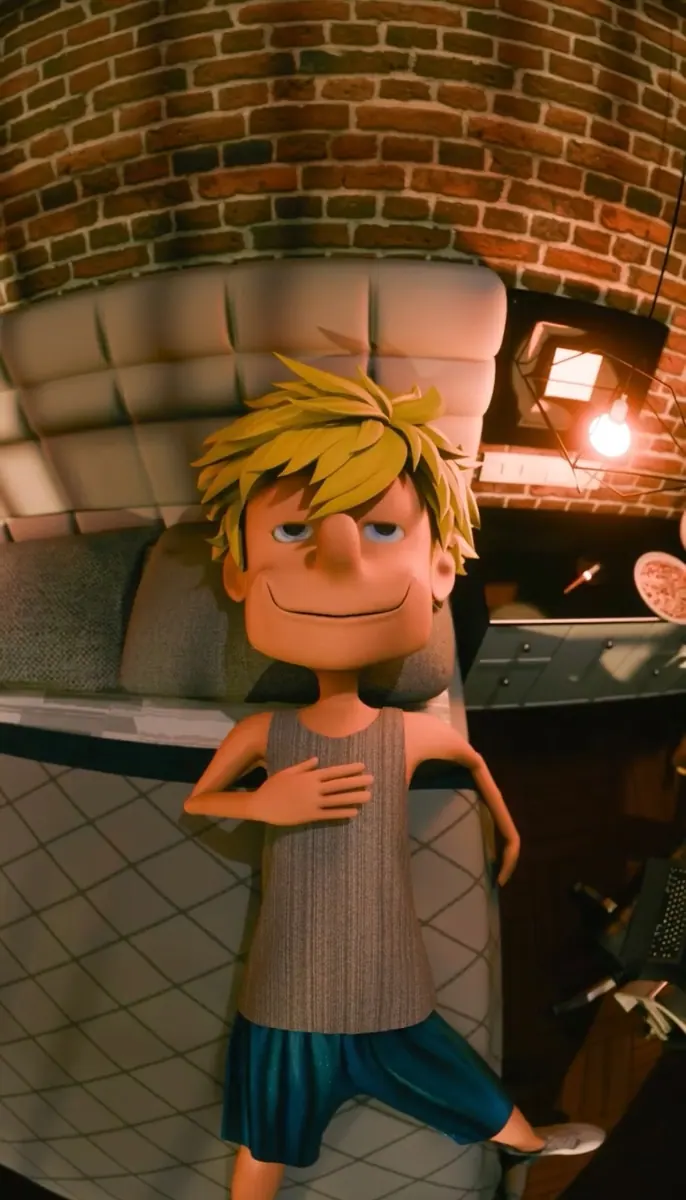
Character Animation for Brands: Mascots That Build Recognition
A brand mascot is a character that represents your company in a consistent, recognizable way. Animation gives that character a personality, a voice and movement, so people remember it and feel something toward your brand. A good mascot is simple to read, easy to animate repeatedly, and used across your ads, product pages, social posts and support content.
What brand character animation is
Character animation for brands means designing a character and then bringing it to life in videos, GIFs, loops and interactive content. It is different from a one-off character in a single ad. A brand character is a long-term asset.
Familiar examples show the idea: a bird that nudges language learners, a lizard that appears in insurance ads, a tiger on a cereal box. These characters last because they are distinct, consistent and used often.
Types of brand characters include:
- Mascots: a face for the brand, such as an animal, object or imagined creature.
- Brand ambassadors: a human-like animated host who explains products.
- Product characters: the product itself gets eyes, arms and a voice.
- Founder or team avatars: stylized characters that stand in for real people.
- Series characters: a cast that appears in recurring content.
Why characters help brands
Characters do work that logos and photography cannot.
- They are memorable. A face and a personality are easier to recall than a name.
- They simplify complex ideas. A friendly character can walk through a product, a policy or a process.
- They create emotional connection. People respond to expressions, humor and small gestures.
- They scale across formats. The same character fits a 6-second ad, a tutorial and a social post.
- They give you a consistent voice. The character can carry your tone in every message.
- They level the field for smaller brands. A distinct character can make a small company feel established, without needing a celebrity or a large budget.
Be honest about outcomes. A mascot supports recognition and affinity over time. It does not guarantee sales on its own, and results depend on how well the character is designed, how often it appears and how it fits your audience.
Design principles for a character that lasts
1. Start with the brand, not the drawing. What does the brand stand for? List three personality traits and design to match. 2. Keep the silhouette simple. If you can recognize it as a black shape, it will work at small sizes. 3. Limit the palette. Two or three main colors tied to your brand identity. 4. Plan for motion. Avoid complex clothing, hair or accessories that are hard to animate repeatedly. 5. Design expressions. Create a set: happy, surprised, confused, proud, tired. 6. Choose a clear voice. Decide how the character speaks, or whether it stays silent. 7. Think about the audience. A character for kids needs different design and tone than one for finance. 8. Test the design. Show it to people in your target audience and ask what they think it is like.
2D or 3D character animation?
| Factor | 2D | 3D | |---|---|---| | Look | Flat, graphic, illustrative | Depth, lighting, tactile materials | | Camera freedom | Limited | Any angle, easy reuse of the same model | | Production per new scene | Often redrawn | Rig reused; new poses and camera | | Upfront effort | Moderate | Higher (model, rig, textures) | | Best for | Explainers, social, humor | Commercials, packaging tie-ins, long-term series |
3D takes more effort at the start, because the character must be modeled and rigged. After that, each new scene is faster because the same asset can be posed and filmed from any angle. 2D can be faster for short, stylized pieces. The right choice depends on the number of videos you expect to make and the visual style of your brand.
How a mascot project works with us
At Animate & Create, Brett directs each project, from first call to delivery. A typical character project follows these steps:
1. Brief and references: Brand values, audience, competitors, and characters you like or dislike. 2. Concept sketches: A few directions to choose from. 3. Final design and turnaround: The chosen character shown from front, side and back, with a few expressions. 4. Build: Modeling and rigging for 3D, or asset preparation for 2D. 5. First animation: A short piece that shows the character in motion. 6. Delivery: Final files plus the character kit so you can use the design consistently.
Projects run through the client portal at animateandcreate.app, where you can review frames and leave comments.
Using the character across channels
A mascot works best when it appears often and in a consistent way.
- Ads: Short spots that put the character in a clear situation.
- Website and product pages: Looping animations beside product descriptions or in onboarding.
- Social media: Reactions, announcements and holiday posts.
- Email: Animated headers or GIFs.
- Support and help content: The character guides users through steps.
- Packaging and retail: QR-linked animations, display screens or in-store video.
- Events: Large screens, costumes or live appearances based on the same design.
Create a short brand style guide for the character: colors, proportions, what it never does and the tone of voice. Anyone creating content with the character can follow it.
What character animation costs
The cost depends on whether you need character design and a rig, and on how many scenes you need. The main drivers are:
- Design and rigging: a new 3D mascot needs concept work, modeling and a rig before any animation starts.
- Number of scenes and length: more seconds and more locations mean more production time.
- Complexity: facial animation, props, costume changes and simulations such as hair or cloth.
- Revisions: more review rounds add time.
- Deadline: a tight date can mean rush scheduling.
A short animation using a simple existing character is a small job. Designing and rigging a new 3D mascot, then animating it, is a larger one.
Every project is quoted after a short call. DM us on Instagram or book a call and we'll scope it and send a fixed quote.
How to judge whether a mascot is working
Avoid vanity metrics. Look at measures tied to the goal.
- Recognition: Ask customers in surveys whether they recognize the character and connect it to your brand.
- Engagement: Compare how character content performs against other content on the same channel.
- Search and direct traffic: Notice whether branded searches increase after a campaign.
- Sentiment: Read comments and support messages for the language people use about the character.
- Reuse: A character that your team keeps wanting to use is a good sign.
Give a mascot time. Recognition builds with repetition, so measure over months, not days.
Related reading
Explore more on brand storytelling in brand storytelling with animation, building brand identity with 3D animation, the psychology of 3D animation, fashion brand video content and sustainable brand storytelling.
FAQ
How much does a custom brand mascot cost?
It depends on style and scope. A simple animated clip with an existing character is a small job, while designing and rigging a new 3D mascot is a larger one. Length, number of scenes, complexity, revisions and deadline all affect the cost. Every project is quoted after a short call, so book a call and we'll send a fixed quote.
Should my mascot be 2D or 3D?
Choose 2D for fast, stylized content and 3D if you plan many videos, commercials or consistent camera work. A 3D character costs more up front, but the same model can be reused across many scenes.
Can small businesses benefit from a mascot?
Yes. A distinct character can help a small brand look consistent and become memorable. Keep the design simple and plan to use it regularly across your channels.
What is the difference between a mascot and a character in a single ad?
A mascot is a long-term brand asset that appears across campaigns. A character in one ad exists for that story only. If you want recognition over time, design the character with reuse in mind.
How do I know if my mascot is working?
Track recognition in customer surveys, engagement versus other content, branded search and direct traffic, and sentiment in comments. Measure over months because recognition builds through repetition.
Thinking about a brand character? Contact us to talk through ideas, or book a call and we'll send a fixed quote.
About the author: Brett Barber, Creative Director & Founder at Animate & Create.
Brand mascots increase recognition by a whopping 36% and positive sentiment by an even more impressive 41%.
Nielsen studies
Characters can increase purchase intent by as much as 20% compared to brands without mascots.
Nielsen studies
80% of customers are more likely to make a purchase when a brand provides personalized experiences, which characters can facilitate.
Epsilon
Companies that create emotional connections with customers outperform competitors by 85% in sales growth.
Forrester
Frequently asked questions
How much does a custom brand mascot cost?
It depends on style and scope. A simple animated clip with an existing character is a small job, while designing and rigging a new 3D mascot is a larger one. Length, number of scenes, complexity, revisions and deadline all affect the cost. Every project is quoted after a short call, so book a call and we'll send a fixed quote.
Should my mascot be 2D or 3D?
Choose 2D for fast, stylized content and 3D if you plan many videos, commercials or consistent camera work. A 3D character costs more up front, but the same model can be reused across many scenes. The details depend on your product and scope. Book a short call at animateandcreate.net/contact and you will get a fixed quote.
Can small businesses benefit from a mascot?
Yes. A distinct character can help a small brand look consistent and become memorable. Keep the design simple and plan to use it regularly across your channels. The exact answer depends on your product, scope and deadline, so each project is scoped individually. Book a short call at animateandcreate.net/contact and you will get a fixed quote.
What is the difference between a mascot and a character in a single ad?
A mascot is a long-term brand asset that appears across campaigns. A character in one ad exists for that story only. If you want recognition over time, design the character with reuse in mind. The details depend on your product and scope. Book a short call at animateandcreate.net/contact and you will get a fixed quote.
How do I know if my mascot is working?
Track recognition in customer surveys, engagement versus other content, branded search and direct traffic, and sentiment in comments. Measure over months because recognition builds through repetition. The exact answer depends on your product, scope and deadline, so each project is scoped individually. Book a short call at animateandcreate.net/contact and you will get a fixed quote.
References
- The Power of Brand Mascots — Nielsen (2021). https://www.nielsen.com/
- The Impact of Character Animation in Marketing — HubSpot (2023). https://blog.hubspot.com/marketing/character-animation-marketing
- Why Emotional Connections Matter in Branding — McKinsey & Company (2017). https://www.mckinsey.com/capabilities/growth-marketing-and-sales/our-insights/the-new-rules-of-emotional-connection
- State of Video Marketing Report — Wyzowl (2023). https://www.wyzowl.com/video-marketing-statistics/