Brand Storytelling Through Animation: Emotional Connection
How brands use animation to tell clear, consistent stories: ingredients, styles, measurement and typical costs.
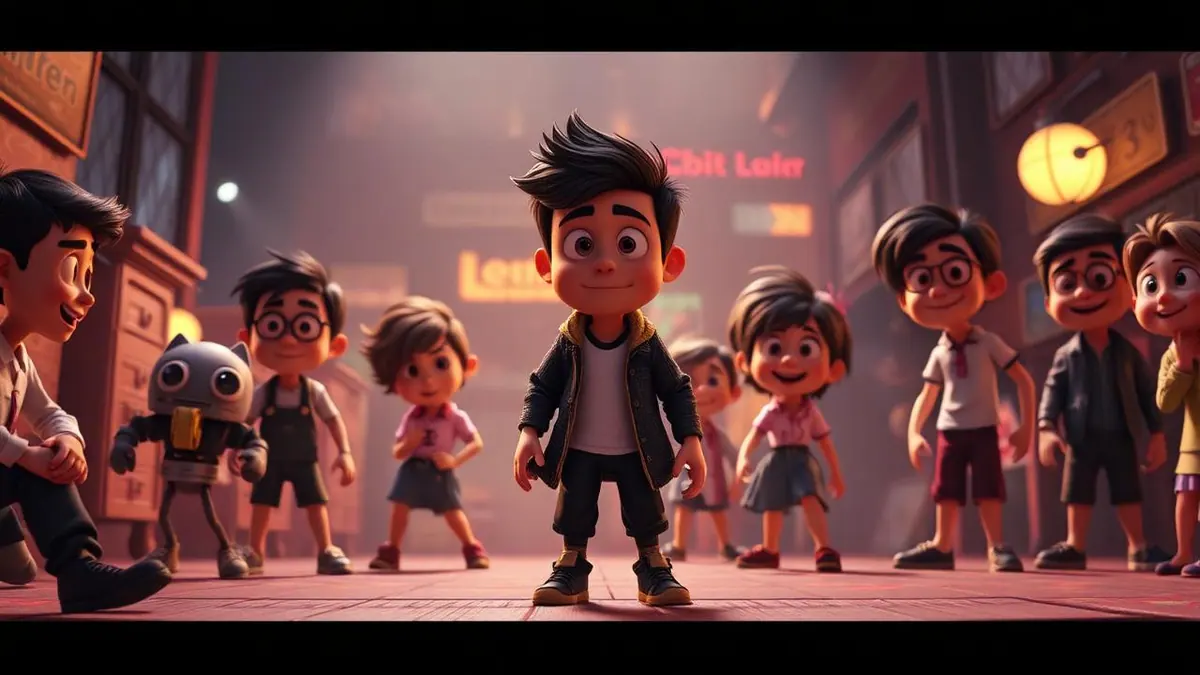
Brand Storytelling Through Animation: Building Emotional Connections
Animation helps brands tell stories because it can show anything: an idea, a feeling, a product's inner workings or a character who stands for the company. Viewers follow a story more readily than a list of features. When the story is simple, consistent and tied to a real customer need, it builds familiarity and trust over time.
Why animation suits brand storytelling
Live action is tied to what a camera can capture. Animation is not, and that freedom matters for brand stories in four ways.
- Control. Every color, movement and camera angle is deliberate, so the film matches the brand exactly.
- Imagination. You can show a product's journey, a microscopic detail, an abstract benefit or a world that does not exist.
- Consistency. A character, palette and visual style can be reused across dozens of videos without scheduling actors or locations.
- Flexibility. The same 3D assets can be cut into a hero film, short social clips and product loops.
Animation does not replace honesty. A story only works if it reflects something true about the brand.
The ingredients of a brand story that lands
Most effective brand films, animated or not, share a few simple parts:
1. A clear audience. Decide who the story is for before choosing a style. 2. A single idea. One message per film. If you need to say five things, make five films. 3. A character or point of view. This can be a person, a mascot, a product or the viewer. 4. A change. Something starts one way and ends another: a problem solved, a routine improved, a feeling shifted. 5. A reason to believe. A detail that makes the claim credible, such as how the product is made or what it does. 6. A clear next step. Tell viewers what to do or where to go.
Keep it short. Many brand films work in 15 to 60 seconds, and a single hero film of a minute or two is plenty for most small and mid-size brands.
Choosing an animation style that fits your brand
Style carries meaning before a single word is spoken. Match it to your audience and product.
| Style | Feels | Works well for | Watch out for | |---|---|---|---| | Photoreal 3D | Premium, tangible | Physical products, luxury, beauty, tech | Higher cost and longer schedules | | Stylized 3D | Friendly, polished | Consumer brands, apps, family audiences | Needs consistent character design | | 2D motion graphics | Clear, efficient | Explainers, services, software | Can feel generic without a strong palette | | Mascot or character | Memorable, warm | Brands that want recognition and personality | Requires commitment to keep the character consistent | | Abstract or kinetic | Modern, energetic | Launches, events, tech | Message can get lost if not anchored |
Our guides on character animation and mascots and on building brand identity with 3D animation go deeper on the character and identity side.
Translating brand values into visuals
Start from the values you can actually demonstrate.
- Craft: show close, slow shots of materials and process.
- Sustainability: show the product life cycle and origin, with specifics you can back up. Avoid vague claims.
- Speed or ease: use clear, quick transitions and simple compositions.
- Care: use warm light, soft motion and human-scale settings.
- Innovation: use precise, mechanical or exploded views that reveal how it works.
Then lock the basics into a short style sheet: palette, typography, camera language, music mood and, if you use one, the character model. A style sheet is what lets a second or third film feel like part of the same family. For a sector example, see our piece on fashion brand video storytelling.
How to measure whether a story is working
Do not judge a brand film only by view counts. Pick measures that match its job.
- Awareness films: reach, watch-through rate, branded search and direct traffic over the weeks after release.
- Consideration films: time on page, click-through to product pages, saves and shares.
- Conversion-supporting films: conversion rate and add-to-cart rate on pages that include the video, compared with similar pages without it.
- Loyalty content: email engagement, repeat purchase and community responses.
Brand effects build slowly and are shared with other marketing, so be cautious about attributing results to one video. Compare before and after, keep a consistent reporting window and record what else changed.
Common storytelling mistakes
- Starting with the logo instead of the viewer. Open with a situation the audience recognizes, then bring in the brand.
- Too many messages. A film that tries to cover every product and value ends up remembered for none.
- A style that does not match the product. A playful cartoon look can undercut a premium price point, and cold photoreal visuals can feel distant for a children's brand.
- A slow first five seconds. Social viewers decide quickly. Put the most interesting image or question first, and design for silent viewing with clear visuals and captions.
- No consistency. If every film has a different look, viewers never build recognition. Reuse the palette, typography and character.
- Claims you cannot back up. Specific, checkable details build trust. Vague superlatives do not.
- Ignoring distribution. Plan the aspect ratios (16:9, 1:1, 9:16) and cutdowns before production, not after.
A practical production path
1. Brief: audience, single message, where it will run, length, formats. 2. Script and storyboard: a one-page script and a set of simple frames. Approve these before building. 3. Style frames: one or two finished-looking images to confirm the look. 4. Animatic: a rough timed edit of the boards, to check pacing. 5. Production: modeling, animation, lighting and rendering. 6. Review: one or two focused rounds of feedback. In our experience, projects with a clear brief usually need one to two rounds. 7. Delivery: all aspect ratios and cutdowns you need.
What it costs
The cost of an animated brand film depends on the length, the style (stylized 2D or 3D is lighter than photoreal 3D), how many characters, products or scenes appear, any simulations or special effects, the number of revision rounds and how fast you need it. Every project is quoted after a short call. DM us on Instagram or book a call and we'll scope it and send a fixed quote. Brand-story work is covered under our brand storytelling service. At Animate & Create, Brett directs every project, so the person who hears your brief is the person guiding the film.
FAQ
How does animation create an emotional connection?
Animation lets you control pace, color, music and character, which are the tools that shape feeling. A relatable character or a clear change from problem to solution gives viewers something to care about. The connection is strongest when the story reflects something true about your brand.
What types of brands benefit most from animated storytelling?
Brands with products that are hard to film, abstract services, software and companies that want a recognizable character benefit most. Physical product brands use 3D to show details and settings that cameras cannot reach. Any brand with a clear message can use it.
Can animated stories improve customer loyalty?
They can support loyalty by keeping the brand familiar, consistent and easy to remember. Loyalty also depends on product quality, service and follow-up, so treat animation as one part of the experience rather than a fix by itself.
What makes an animated brand story effective?
A single clear idea, a defined audience, a character or viewpoint, a change from beginning to end and a next step for viewers. Short, focused films usually outperform long ones that try to say everything.
Is animated brand storytelling affordable for small businesses?
Yes, if you scope sensibly. Cost depends on length, style, number of scenes, effects, revisions and deadline, and a short custom film is a sensible place to start. Reusing the assets for social cutdowns keeps the cost per piece low. Book a call and we'll scope it and send a fixed quote.
To talk through your brand story, contact us with a short brief. Every project is quoted after a short call. DM us on Instagram or book a call and we'll scope it and send a fixed quote.
About the author: Brett Barber, Creative Director & Founder at Animate & Create.
73% of people prefer to watch a short video to learn about a product or service.
Wyzowl's State of Video Marketing Survey 2023
Viewers retain 95% of a message when they watch it in a video, compared to 10% when reading it in text.
Insivia
Frequently asked questions
How does animation create an emotional connection?
Animation lets you control pace, color, music and character, which are the tools that shape feeling. A relatable character or a clear change from problem to solution gives viewers something to care about. The connection is strongest when the story reflects something true about your brand.
What types of brands benefit most from animated storytelling?
Brands with products that are hard to film, abstract services, software and companies that want a recognizable character benefit most. Physical product brands use 3D to show details and settings that cameras cannot reach. Any brand with a clear message can use it.
Can animated stories improve customer loyalty?
They can support loyalty by keeping the brand familiar, consistent and easy to remember. Loyalty also depends on product quality, service and follow-up, so treat animation as one part of the experience rather than a fix by itself. The details depend on your product and scope. Book a short call at animateandcreate.net/contact and you will get a fixed quote.
What makes an animated brand story effective?
A single clear idea, a defined audience, a character or viewpoint, a change from beginning to end and a next step for viewers. Short, focused films usually outperform long ones that try to say everything. The details depend on your product and scope. Book a short call at animateandcreate.net/contact and you will get a fixed quote.
Is animated brand storytelling affordable for small businesses?
Yes, if you scope sensibly. Cost depends on length, style, number of scenes, effects, revisions and deadline, and a short custom film is a sensible place to start. Reusing the assets for social cutdowns keeps the cost per piece low. Book a call and we'll scope it and send a fixed quote.
References
- The Economic Impact of the U.S. Entertainment Industry — U.S. Bureau of Economic Analysis (BEA) (2023). https://www.bea.gov/
- The State of Video Marketing Report — Wyzowl (2023). https://www.wyzowl.com/
- The Science of Storytelling: Why Your Brain Loves a Good Story — Harvard Business Review (2022). https://hbr.org/
- The Psychology Behind Why We Connect to Animated Characters — Psychology Today (2021). https://www.psychologytoday.com/