Product Visualization for E-commerce: What Helps Sales (2026)
How 3D product visualization helps e-commerce pages: formats, seven practical tactics, costs and how to test what works.
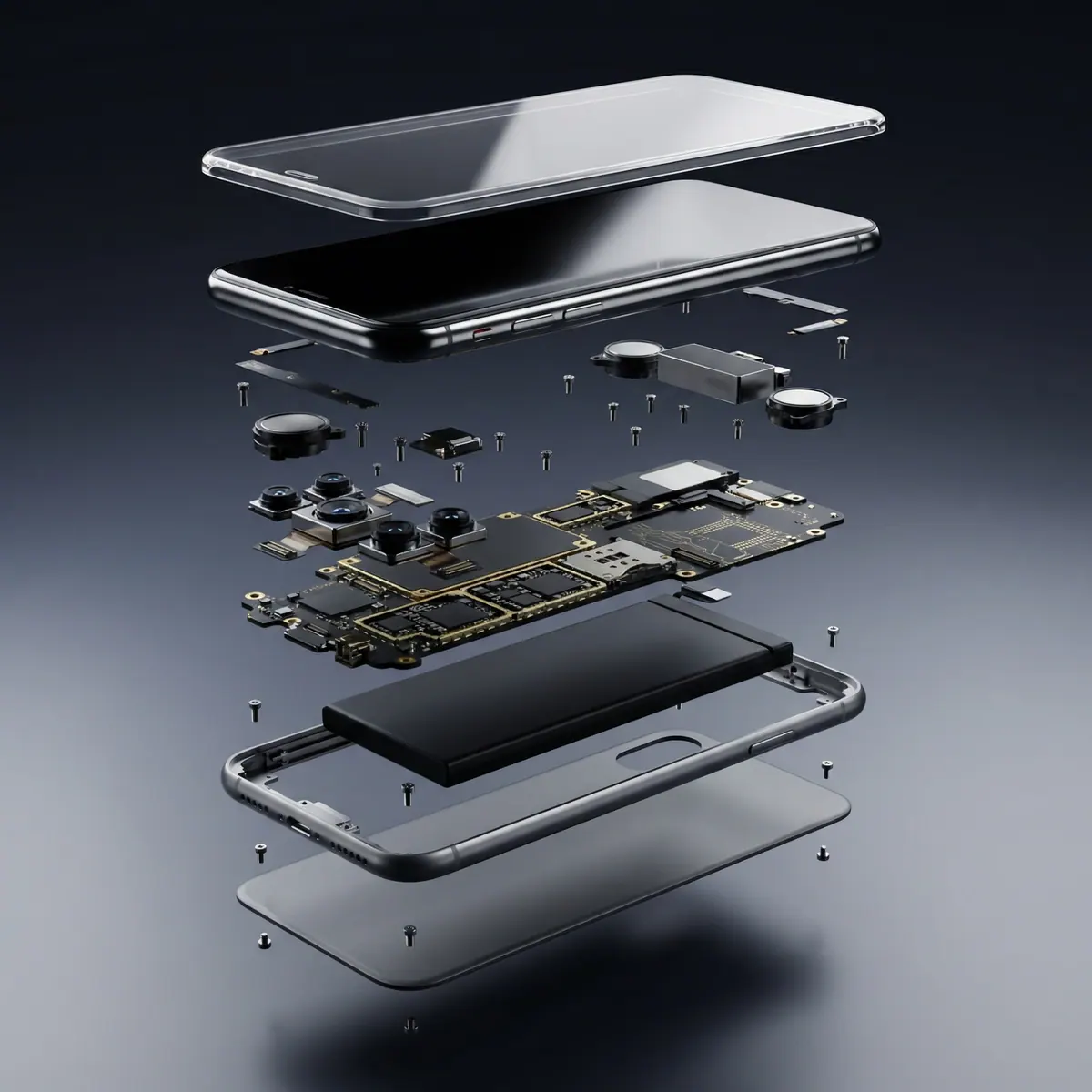
Product Visualization for E-commerce: Practical Ways to Improve Conversion (2026)
Product visualization improves e-commerce conversion by answering the questions shoppers cannot ask: what does it look like from the back, how big is it, how does it work, what does the finish look like. Photorealistic 3D renders, rotating views, short animations and AR previews all do this. The right choice depends on your product and budget.
What product visualization actually means
Product visualization is the use of 3D models to produce images and video of a product. Because the product exists as a digital model, you can create:
- Still renders for listings and ads, with clean backgrounds or lifestyle scenes.
- 360-degree spins that let shoppers rotate the product.
- Short animations that show features, assembly or use.
- Interactive viewers where shoppers rotate and zoom a live 3D model.
- AR previews that place the product in the shopper's room or on their body through a phone.
- Configurators where buyers pick colors, materials or options and see the result.
All of these can come from one model, which is where the cost advantage comes from. For a broader overview, see our guide to 3D product visualization for e-commerce.
Why it can help conversion
We do not promise a specific lift, because results vary by product, price point, traffic quality and page design. The reasons visualization tends to help are straightforward:
1. It reduces uncertainty. Online shoppers cannot touch the product. Clear, detailed visuals stand in for the missing senses. 2. It shows what photos cannot. Interiors, cutaways, moving parts, scale and variants are easy in 3D. 3. It keeps visuals consistent. Every color and angle looks like it belongs to the same set. 4. It supports fewer returns when it sets accurate expectations. If buyers know what they are getting, fewer are surprised. 5. It makes testing cheap. Once the model exists, new angles, backgrounds and seasonal looks are inexpensive to produce.
Treat any published percentage as a reference for that study's setting, not a forecast for your store. Test on your own pages.
Seven practical tactics
1. Fix the main image first
The first image in a listing does the most work. Use a clean, well-lit render with the full product visible, correct proportions and accurate color. Marketplace rules may require a white background, so check the current requirements for each platform.
2. Add a short loop or animation
A 5- to 15-second loop that rotates or demonstrates the product often answers more questions than another still image. Keep it silent-friendly with no required audio.
3. Show scale and context
Shoppers misjudge size often. Add a render that places the product next to a familiar object or in a room. For small items, show a hand-scale view.
4. Show variants from the same model
If you sell six colors, you do not need six photoshoots. Render each variant from the same model so the images match exactly.
5. Use callouts for features
Label two to four key features in the image or video. Do not crowd the frame. Features that matter most are those that answer the questions your support team gets.
6. Consider AR where it fits
AR makes the most sense for products where placement matters, such as furniture, decor, eyewear or appliances. For small items it is often unnecessary.
7. Test and keep what works
Change one thing at a time, such as adding a video, and compare conversion and return rates over a meaningful period. Keep what performs.
Choosing the right format
| Format | Best for | Effort and cost | Notes | |---|---|---|---| | Still renders | All products | Lowest | Good starting point | | 360 spin | Products with a distinct shape or finish | Low to moderate | Easy to understand | | Short animation | Features, assembly, use | Moderate | Great for ads and product pages | | Interactive 3D viewer | Complex or high-consideration products | Moderate to high | Needs web integration | | AR preview | Placement-dependent products | Moderate to high | Depends on device support | | Configurator | Customizable products | Highest | Best where options drive choice |
3D vs traditional photography
Photography is excellent for real textures, people and lifestyle. 3D is excellent for products that are reflective, small, complex, not yet manufactured or sold in many variants. Many brands combine them: photography for the lived-in feel, 3D for precision and variants. If you are comparing costs, count reshoots, shipping samples, studio time and retouching on the photography side.
What suits which type of product
- Reflective or transparent items such as cosmetics, jewelry and glassware are hard to light on set and often easier to render.
- Technical products such as electronics and tools benefit from cutaways and feature animations.
- Furniture and decor benefit from room scenes and AR.
- Apparel is harder; 3D works better for accessories, footwear and hardware than for fabric drape.
- Food usually looks best with real photography, though stylized 3D works for packaging and ads.
Mistakes that waste a visualization budget
- Rendering too many images before checking accuracy. Approve the model, colors and proportions on one test render first. Fixing a model later means re-rendering everything.
- Over-polishing and under-informing. A beautiful image that hides the feature buyers ask about does less than a plainer one that shows it.
- Ignoring page speed. Heavy videos and 3D viewers can slow a product page. Compress files, set sensible dimensions and use lazy loading where your platform supports it.
- Mismatch with real products. If the render looks better than the item that arrives, returns and bad reviews follow. Match color and finish to the real product.
- Skipping mobile. Most store traffic is on phones. Check every format on a phone before you publish.
- No measurement plan. Decide beforehand which numbers you will compare, such as conversion rate, add-to-cart rate and return rate, and over what period.
Cost and timeline
Cost and timeline depend on the number of products, how complex each model is, the formats you need (stills, spins, animation, AR), any simulations, revision rounds and the deadline. Every project is quoted after a short call. DM us on Instagram or book a call and we'll scope it and send a fixed quote.
How to brief a studio for good results
- Send CAD files or clear reference photos from several angles.
- Share brand colors and any packaging artwork.
- List the three most important features to show.
- Say where the visuals will run and in which formats.
- Provide examples of looks you like.
Our guide on how to brief a 3D animation studio covers this in detail, and our Amazon listing video guide covers marketplace specifics. You can also see our product visualization service.
FAQ
What is the main benefit of 3D product visualization for e-commerce?
It lets shoppers see the product clearly from every useful angle, which reduces uncertainty before purchase. It also lets you create many variants and formats from one model. Results vary, so test on your own pages.
Does AR product visualization increase sales?
It can help for products where placement or scale matters, such as furniture and eyewear, because shoppers can check fit before buying. It is less useful for small, simple items. Measure conversion and returns for the products where you add it.
Can product visualization reduce returns?
It can when returns come from buyers misjudging size, color or function. Accurate visuals set better expectations. It cannot fix returns caused by quality problems or fit issues that images cannot show.
How are 3D renders different from product photography?
Renders are built from a digital model, so you can create any angle, variant or setting without a physical shoot. Photography captures a real sample and real-world texture. Many brands use both.
Is product visualization suitable for every product?
Not equally. It is strongest for reflective, technical, small or highly variant products. Some categories, such as fresh food and flowing apparel, are usually better served by photography.
To discuss visuals for your products, contact us with your product and goals. Every project is quoted after a short call. DM us on Instagram or book a call and we'll scope it and send a fixed quote.
About the author: Brett Barber, Creative Director & Founder at Animate & Create.
The global 3D rendering and visualization market is projected to reach $13.5 billion by 2027.
Fortune Business Insights
Over 75% of internet users have tried or are interested in augmented reality shopping experiences.
Statista Global Consumer Survey 2023
Frequently asked questions
What is the main benefit of 3D product visualization for e-commerce?
It lets shoppers see the product clearly from every useful angle, which reduces uncertainty before purchase. It also lets you create many variants and formats from one model. Results vary, so test on your own pages. The details depend on your product and scope. Book a short call at animateandcreate.net/contact and you will get a fixed quote.
Does AR product visualization increase sales?
It can help for products where placement or scale matters, such as furniture and eyewear, because shoppers can check fit before buying. It is less useful for small, simple items. Measure conversion and returns for the products where you add it.
Can product visualization reduce returns?
It can when returns come from buyers misjudging size, color or function. Accurate visuals set better expectations. It cannot fix returns caused by quality problems or fit issues that images cannot show. The details depend on your product and scope. Book a short call at animateandcreate.net/contact and you will get a fixed quote.
How are 3D renders different from product photography?
Renders are built from a digital model, so you can create any angle, variant or setting without a physical shoot. Photography captures a real sample and real-world texture. Many brands use both. The details depend on your product and scope. Book a short call at animateandcreate.net/contact and you will get a fixed quote.
Is product visualization suitable for every product?
Not equally. It is strongest for reflective, technical, small or highly variant products. Some categories, such as fresh food and flowing apparel, are usually better served by photography. The exact answer depends on your product, scope and deadline, so each project is scoped individually. Book a short call at animateandcreate.net/contact and you will get a fixed quote.
References
- Extended Reality (XR) Market Size, Share & Analysis Report, 2023 - 2030 — Grand View Research (2023). https://www.grandviewresearch.com/industry-analysis/extended-reality-xr-market
- The Global State of Immersive Experiences — Statista (2023). https://www.statista.com/
- 3D Rendering and Virtualization Market Report — Fortune Business Insights (2022). https://www.fortunebusinessinsights.com/3d-rendering-and-virtualization-market-106575
- Augmented Reality (AR) & Virtual Reality (VR) Market Size, Share & Trends Analysis Report By Technology, By Component, By Application, By Industry, By Region, And Segment Forecasts, 2023 - 2030 — ResearchAndMarkets (2023). https://www.researchandmarkets.com/report/augmented-reality-ar
- Why You Need 3D Product Visualization for Your E-Commerce Business — Adobe (2022). https://business.adobe.com/blog/the-latest/3d-product-visualization-ecommerce