FOOH Advertising: How Fake Out-of-Home Ads Work
FOOH ads place CGI objects in real-world footage for social media. Here is how they are made, what drives the cost, and when they make sense.
FOOH Advertising: How Fake Out-of-Home Ads Work
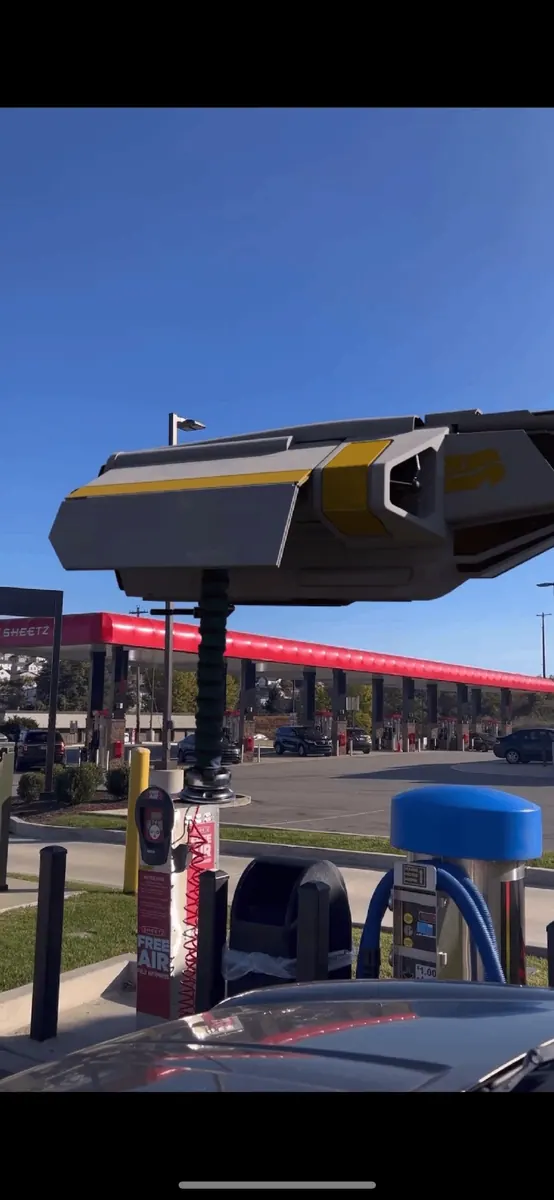
FOOH stands for fake out-of-home. A studio shoots or sources real footage of a street, building or landscape, then adds 3D animated objects so convincingly that they look like they are really there. Think of a giant product sitting on a city corner. Nothing physical exists. The ad lives on social media, where a surprising clip can travel far beyond the brand's own followers.
What FOOH is and how it differs from OOH
Out-of-home (OOH) is advertising in physical spaces: billboards, transit shelters, posters and installations. It costs money to print, install and rent space, and it reaches people who pass by.
FOOH reverses the model. The installation is digital, so the budget goes into 3D production instead of fabrication and permits. The audience is online, and the clip is the product.
| | OOH | FOOH | |---|---|---| | Where it appears | Physical locations | Social feeds and websites | | Production | Print, build, install | 3D modeling, tracking, compositing | | Permits and site rental | Usually required | Only for the filming location | | Limits | Physics, safety, weather | Imagination and render time | | Reach | Local passersby | Whoever shares the clip |
How FOOH is made
A good FOOH clip is a visual effects shot with a marketing idea behind it. The usual steps:
1. Concept. One clear, surprising idea that works with the sound off. 2. Plate. Real footage of the location, shot or sourced, with the camera path planned for tracking. 3. Camera tracking. Software reconstructs the camera move so the CGI object stays locked to the scene. 4. 3D modeling and texturing. The product or object is built with believable materials and scale. 5. Lighting. The CGI must match the real light direction, color and softness. 6. Animation and interaction. The object moves, casts shadows and sometimes interacts with real elements such as people or traffic. 7. Compositing. Render layers are combined with the footage, with grain, reflections and motion blur matched. 8. Sound. Ambient sound, impact sounds and music sell the illusion as much as the picture.
The details that break the illusion are shadows that do not match, wrong scale, and objects that float. Most of the craft is in getting those right.
Why brands use FOOH
- Physical constraints disappear. You can place a product the size of a building anywhere.
- Cost can be lower than a physical stunt. There is no fabrication, installation or removal, though high-quality CGI is still real work.
- It suits short-form video. The format is built for a vertical clip that makes people stop scrolling.
- The asset is reusable. The 3D model of your product can be used again for ads, product pages and stills.
- It travels. A clip that makes viewers ask "is that real?" tends to get comments and shares.
We do not promise specific engagement numbers for any campaign. Results depend on the idea, the execution, the audience and how the clip is posted.
Is FOOH deceptive?
This is a fair question. The format asks viewers to believe something for a few seconds. Good practice is to make it clear the clip is CGI, either with a caption, a hashtag or a reveal at the end. Many successful FOOH clips play with the "is it real?" reaction but do not claim a physical installation exists. Check the advertising rules for your market and the policies of each platform before you publish. If you are in a regulated category, ask a lawyer.
What a FOOH campaign costs
Prices vary because FOOH can be a simple object in a stable shot or a complex, interactive scene. We do not publish a price list. Every project is quoted after a short call. DM us on Instagram or book a call and we'll scope it and send a fixed quote.
What drives the cost:
- Camera. A locked camera is simpler than a moving, handheld one that needs heavy tracking.
- Complexity of the object. Materials, moving parts and fine detail add modeling and lighting time.
- Interaction. Crowds, reflections, destruction or fluid simulation push the work up.
- Number of shots and products.
- Revisions.
- Deadline. Rush delivery is quoted case by case.
Planning a FOOH campaign
- Start with one idea. If it takes a paragraph to explain, simplify it.
- Pick a location that suits the idea. A recognizable place helps, but check filming permissions.
- Keep the camera simple for your first one. Handheld moves with heavy parallax are harder to track.
- Decide where it will run. Vertical for short-form feeds, wider for YouTube or your site.
- Plan the sound. Sound design is half of believability.
- Prepare product files. CAD or clean reference photos speed up modeling.
- Add a reveal. A final moment that shows the product or logo gives the clip a purpose.
A realistic example of the process
Say a beverage brand wants a clip where a giant can appears to rest on a rooftop at sunset. The studio first agrees the idea in one sentence and confirms the location footage. The footage is tracked, the can is modeled from the brand's CAD files, and the lighting is matched to the sunset in the plate. A few small details then carry the realism: a soft contact shadow on the roof, a faint reflection of the sky on the metal, and wind noise in the sound mix. The brand reviews a rough version, asks for a slightly lower camera angle, and approves a final render. Most of the time goes into lighting and compositing, not into the modeling of the can.
How to judge a FOOH proposal
- Ask to see work where the camera moves, not just locked-off shots.
- Check that the studio has a plan for tracking, lighting reference and sound.
- Confirm how many revision rounds are included and what the render cost covers.
- Ask which formats you receive, including vertical.
What goes wrong
The usual failures are rushed lighting, objects that do not touch the ground convincingly, and concepts that are interesting but do not connect to the product. Another common problem is overlong clips. Most FOOH works in a short runtime, with the surprise arriving early.
Related reading
If you are comparing CGI with traditional video, see CGI commercials versus traditional video and FOOH marketing and fake out-of-home advertising. Our team builds FOOH-style clips as part of 3D animation work, so the same process applies.
FAQ
What is the difference between OOH and FOOH advertising?
OOH is physical advertising such as billboards and installations. FOOH uses 3D animation composited into real footage, so the installation exists only on screen. The first is built, the second is rendered.
Why is FOOH popular on social media?
The format is short, visual and surprising, which suits vertical feeds. Viewers often watch a second time to work out how it was done, and that curiosity drives comments and shares.
Is FOOH advertising deceptive?
It can be if the clip claims a physical installation exists. Labeling the video as CGI or revealing it at the end is good practice. Check the ad rules in your market and each platform's policies.
What do you need to make a FOOH video?
Footage or a location plan, a 3D model of the product, camera tracking, lighting that matches the scene, animation, compositing and sound design. Clean CAD files or reference photos of your product help a lot.
How much does a FOOH clip cost?
It depends on complexity. Simple single-object shots with a stable camera cost less, while interactive or simulated scenes cost more. The main drivers are camera work, object detail, simulation, number of shots, revisions and deadline. Every project is quoted after a short call: DM us on Instagram or book a call and we will send a fixed quote.
Ready to talk through your project? Contact us and we will reply with a clear scope and fixed quote. You can also email info@animateandcreate.net.
About the author: Brett Barber, Creative Director & Founder at Animate & Create.
94% of marketers agree that video content has helped increase user understanding of their product or service. (Wyzowl, 2024)
Wyzowl
Most video marketers report that video gives them a positive ROI. (Wyzowl, 2024)
Wyzowl
96% of people have watched a product explainer video to learn more about a product or service. (Wyzowl, 2024)
Wyzowl
79% of consumers prefer watching a video to reading about a product. (Wyzowl, 2024)
Wyzowl
Viewers retain 95% of a message when watching video compared to 10% when reading text. (Wyzowl, 2024)
Wyzowl
Frequently asked questions
What is the difference between OOH and FOOH advertising?
OOH is physical advertising such as billboards and installations. FOOH uses 3D animation composited into real footage, so the installation exists only on screen. The first is built, the second is rendered. The details depend on your product and scope. Book a short call at animateandcreate.net/contact and you will get a fixed quote.
Why is FOOH popular on social media?
The format is short, visual and surprising, which suits vertical feeds. Viewers often watch a second time to work out how it was done, and that curiosity drives comments and shares. The exact answer depends on your product, scope and deadline, so each project is scoped individually. Book a short call at animateandcreate.net/contact and you will get a fixed quote.
Is FOOH advertising deceptive?
It can be if the clip claims a physical installation exists. Labeling the video as CGI or revealing it at the end is good practice. Check the ad rules in your market and each platform's policies. The details depend on your product and scope. Book a short call at animateandcreate.net/contact and you will get a fixed quote.
What do you need to make a FOOH video?
Footage or a location plan, a 3D model of the product, camera tracking, lighting that matches the scene, animation, compositing and sound design. Clean CAD files or reference photos of your product help a lot. The details depend on your product and scope. Book a short call at animateandcreate.net/contact and you will get a fixed quote.
How much does a FOOH clip cost?
It depends on complexity. Simple single-object shots with a stable camera cost less, while interactive or simulated scenes cost more. The main drivers are camera work, object detail, simulation, number of shots, revisions and deadline. Every project is quoted after a short call: DM us on Instagram or book a call and we will send a fixed quote.
References
- The Ultimate Guide to Video Marketing — HubSpot (2023). https://www.hubspot.com/video-marketing
- The State of Video Marketing 2024 — Wyzowl (2024). https://www.wyzowl.com/video-marketing-statistics/
- The Economic Impact of the Advertising Industry — IAB (Interactive Advertising Bureau) (2022). https://www.iab.com/
- Future of Content: The Rise of Virtual Production — Adobe (2023). https://www.adobe.com/creativecloud/how-to/virtual-production.html
- Advertising & Marketing Industry — Statista (2024). https://www.statista.com/markets/422/advertising-marketing/